Listen to Michael's intuitive empath radio interviews with tips & hints:
Blogtalk one hour interview with Michael Smith
Dreamtongue the language of the Empath
EXCERPT:
Empath 101
Dreamtongue - The Empathic Language
What is an Empath?
To get straight to the point: Empath is a form of identity emerging in the twenty-first century. The term has been used in literature and in film, but the reality is that there are ever increasing numbers of people who identify with the Empath concept.
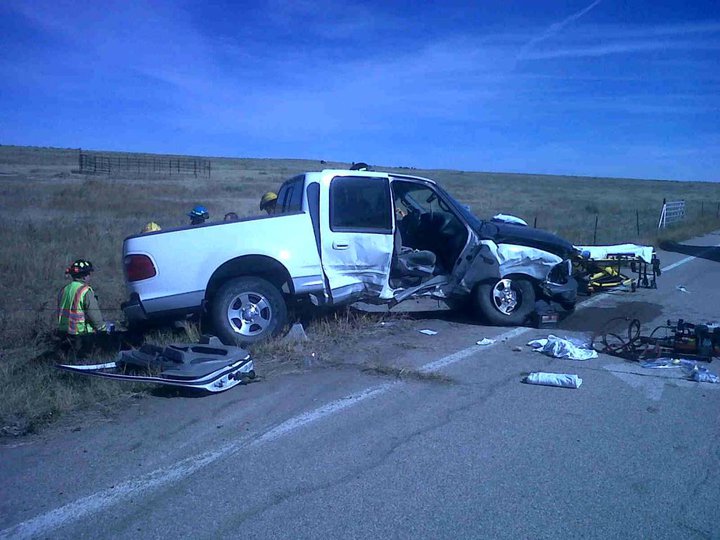
This is the accident my 3 g'kids were in about a month ago.
Saturday, July 3, 2010

Parents poll do you think that empathy can be taught
EXCERPT:
Thank you for sharing your feelings, experiences, and suggestions with other parents. You wrote from the heart, and we appreciate how forthright and specific you were in responding to these questions. We're sorry we can't include what everyone said, but we hope that what's here will help you consider your own situation.
90% of you said that empathy can be taught; 10% said it can't.
Among those of you who feel empathy can be taught the word "example" came up over and over again. You said that parents need to set an example in their own behavior, and point out to children when an empathic response is appropriate, especially when it isn't obvious to them.
When we asked you "Which hurtful behaviors have you seen or heard about?" here's how you responded.
91% reported teasing.
84% witnessed their kids excluding others.
71% heard kids say mean things behind someone's back.
68% observed kids bullying others.
60% heard kids mocking others.
The other hurtful experiences some of you described included
physical violence,
discrimination to the whole family,
deliberately ignoring someone over a period of time,
tattling ("telling on someone for something they didn't do"),
whispering in front of someone,
saying mean things to someone about their religion, color, or race,
ganging up on one child to exclude him,
stealing,
pushing,
shoving,
biting,
kicking.
In response to the question "With which people do your kids find it especially challenging to be empathetic?" you said the biggest challenge for your children is showing empathy toward the people closest to home.
48% of you said that kids have a hard time empathizing with their siblings.
32% of you said that kids have a hard time empathizing with you, their parents.
Outside the home, you said your children find it challenging to be empathic toward
kids of the opposite the gender (17%),
younger kids (14%),
elderly people (13%),
people of different backgrounds (13%),
people with disabilities (11%).
Some of you added that your kids have most trouble empathizing with their peers because they are set in competition with them. Others described, and often lamented, their kids' lack of empathy for those who are; not cool, introverted or socially awkward, overweight, poorer, bullies, smart and flaunt it.
EXCERPT:
Thank you for sharing your feelings, experiences, and suggestions with other parents. You wrote from the heart, and we appreciate how forthright and specific you were in responding to these questions. We're sorry we can't include what everyone said, but we hope that what's here will help you consider your own situation.
90% of you said that empathy can be taught; 10% said it can't.
Among those of you who feel empathy can be taught the word "example" came up over and over again. You said that parents need to set an example in their own behavior, and point out to children when an empathic response is appropriate, especially when it isn't obvious to them.
When we asked you "Which hurtful behaviors have you seen or heard about?" here's how you responded.
91% reported teasing.
84% witnessed their kids excluding others.
71% heard kids say mean things behind someone's back.
68% observed kids bullying others.
60% heard kids mocking others.
The other hurtful experiences some of you described included
physical violence,
discrimination to the whole family,
deliberately ignoring someone over a period of time,
tattling ("telling on someone for something they didn't do"),
whispering in front of someone,
saying mean things to someone about their religion, color, or race,
ganging up on one child to exclude him,
stealing,
pushing,
shoving,
biting,
kicking.
In response to the question "With which people do your kids find it especially challenging to be empathetic?" you said the biggest challenge for your children is showing empathy toward the people closest to home.
48% of you said that kids have a hard time empathizing with their siblings.
32% of you said that kids have a hard time empathizing with you, their parents.
Outside the home, you said your children find it challenging to be empathic toward
kids of the opposite the gender (17%),
younger kids (14%),
elderly people (13%),
people of different backgrounds (13%),
people with disabilities (11%).
Some of you added that your kids have most trouble empathizing with their peers because they are set in competition with them. Others described, and often lamented, their kids' lack of empathy for those who are; not cool, introverted or socially awkward, overweight, poorer, bullies, smart and flaunt it.
Friday, July 2, 2010
7 Signs You're an Empath
I’m writing this article because there just isn’t enough information on the internet. The most common returns on the subject are related to online gaming. So, if you’ve come here looking for tips on RPG – this ain’t it, sorry! Today we’re talking about real lives, real people, real psychism. Before I continue, let me just say Empath is not simply another name for a Clairsentient, though many Clairsentients are indeed Empaths. I’ll get into this more later. That said, if you feel you’re a clairsentient looking for similar information on whether or not you are one, most of these signs will apply to you as well – but be aware those born into clairsentience (as opposed to those born as Empaths, who later harness it and become clairsentient) often can discern what others are feeling but do not actually SUFFER – which is a good way of telling which you are. Once you've figured out that this is what you are, you can then learn how to deal with, and eventually prevent, this kind of thing from overwhelming you.
(Update: A lot of people have asked for tips on dealing with this kind of thing. You can click here to read How to Get Rid of Other People's Energies and also my see my other tips for Empaths)
1. When in public, do you constantly feel overwhelmed with inexplicable emotions for which you can’t determine the reason?
Example. You drop by the mall one Saturday morning. You feel great. You get into the mall, walk past a crowd of people -- and start feeling a bit strangely. It can be anything; you can feel very down, very angry, very sad, very excitable. (The key word here is very.) And you won’t have any explanation for it, you'll just feel it. In other words, you’ve suddenly gone Bi-Polar without actually having the biological deficiency that causes it. And what’s worse, you can’t turn it off. You can carry on, trying to ignore it, but eventually it will be so overwhelming to the point you just want to go home and be alone. This is the reality of an Empath – one who hasn’t yet learned how to block other people’s emotions out. Being around other people is such a harrowing experience that most of them prefer to keep their own company, living the life of a hermit. And they usually find it very much worth it.
2. Do you experience other people's physical ailments?
This is most common with those you have an emotional connection with, but can occur with anyone. A very good example of this would be suddenly feeling very lethargic and fatigued for no reason, and having to remain in bed for a day or two. You’re not sick – not really. You’re not ill. Yet, you feel that you are. Profoundly. You later find out that your “illness” coincided with a lover or family member’s sudden fatigue (resulting from legitimate illness) even though they were in another country at the time and you had no idea until after the fact. Symptoms can also manifest in the form of chest pains, cramps, migraines, etc. You basically experience it all, without contracting the actual illness.
3. Do you feel overwhelmed when watching something horrible in real life or even on television?
This one sounds silly, but viewing the news or depressing commercials designed to induce sympathy and open wallets can debilitate an Empath for several hours. While most people get upset over homeless dogs and cats, an Empath will often feel like their hearts have been lanced. That’s a literal definition, by the way. It’s not something as shallow as sympathy or even ordinary empathy. It’s a feeling of guilt and moral empathy that cannot be easily assuaged. Crying is very common, and not just during that time of month when all the emotions are out of whack!
4. Do you ALWAYS know what someone really means?
In other words, can you always, always, always tell what it is someone meant to say to you? More importantly, can you tell why they didn’t? If an Empath is face to face with someone and has just been lied to -- they will know. And they will know why. They will know if the other person is trying to spare feelings; they will know if malice was involved. In other words, they will know the intent. You cannot lie in the face of an Empath and not be caught out. While they will not often be able to suss the specifics of what you’re hiding, they will know if you mean them well or not. No exceptions. This is more than good intuition and this isn’t a hunch; this is knowing.
5. Do you feel compelled to care for anyone in pain, no matter who they are and what they’ve done to you?
A true Empath cannot walk past someone suffering and not feel a need to stop and help that person. Homeless people can be particularly difficult, as they are everywhere and little can be done to help them unless the Empath has an occupation related to this. A true Empath feels compelled to go to anyone they feel pain from, be it angst or something physical. And a true Empath's compassion will usually be accepted on the spot: People in pain, regardless of how they might normally react to strangers, will receive an Empath with open arms. They know instinctively that their pain matters to them.
6. Do people open up to you – even if you don’t want them to?
Some Empaths are the new-agey peace-loving types who want to hold hands with everyone, but many just want to be alone because they have difficulty processing everything they absorb from other people. (This is usually because they have yet to realize their abilities and haven’t learned to deal with it yet.) For an Empath, however, putting on a grumpy face doesn't keep people they barely know from drawing near and seeking compassion and empathy from them. The ill, the suffering, the weak; they are all drawn to the unconditional understanding and compassion an Empath emits. And Empaths emit it whether they want to or not.That’s not to say Empaths can’t be mean and nasty people -- they surely can be. But those particular Empaths tend to be those with profound sensitivity who've broken down inside and have no other way of keeping other’s emotions at bay. Again, these are Empaths who don’t know of their abilities.
7. Can you heal?
Most Empaths have the ability to heal. Yes, that means physically. This isn’t about Reiki or any other alternative modality, though they may seem similar in concept. An Empath heals instinctively, usually by drawing the pain or ailment out and accepting it into their own bodies. For obvious reasons, this is not recommended for anyone who doesn’t know how to keep from becoming ill in the process. In today’s day and age, everyone seems to want to be psychic to some degree. That’s probably due our evolution of consciousness as human beings. Therefore, many people reading this will likely think themselves Empathic. I cannot stress the following enough: There is nothing fun about being an Empath. It’s often a very draining and miserable existence in which you feel like you have to be entirely alone in order to survive. It is not glamorous, it is not exciting and it is painful more often than not.
You're not crazy!
Being an Empath doesn't have to be so overwhelming, but this is not something most would aspire to so don't get upset if none of this rings true for you. Everyone's got "otherworldly talents" and you needn't be an Empath to excel in the realm of conscious endeavors. If you *are* an Empath, you will know this is you, you will not be saying “Hmm.. maybe… hmm…” If you feel (without hesitation!) these apply to you as I’ve just described, then also know there are ways of coping, and I’ll get into them in future articles. With a little self-awareness you can turn your curse into gift, especially when it comes to being able to ease the emotional and physical pain of others. For now, take consolation in the knowledge that you are not crazy!
I’m writing this article because there just isn’t enough information on the internet. The most common returns on the subject are related to online gaming. So, if you’ve come here looking for tips on RPG – this ain’t it, sorry! Today we’re talking about real lives, real people, real psychism. Before I continue, let me just say Empath is not simply another name for a Clairsentient, though many Clairsentients are indeed Empaths. I’ll get into this more later. That said, if you feel you’re a clairsentient looking for similar information on whether or not you are one, most of these signs will apply to you as well – but be aware those born into clairsentience (as opposed to those born as Empaths, who later harness it and become clairsentient) often can discern what others are feeling but do not actually SUFFER – which is a good way of telling which you are. Once you've figured out that this is what you are, you can then learn how to deal with, and eventually prevent, this kind of thing from overwhelming you.
(Update: A lot of people have asked for tips on dealing with this kind of thing. You can click here to read How to Get Rid of Other People's Energies and also my see my other tips for Empaths)
1. When in public, do you constantly feel overwhelmed with inexplicable emotions for which you can’t determine the reason?
Example. You drop by the mall one Saturday morning. You feel great. You get into the mall, walk past a crowd of people -- and start feeling a bit strangely. It can be anything; you can feel very down, very angry, very sad, very excitable. (The key word here is very.) And you won’t have any explanation for it, you'll just feel it. In other words, you’ve suddenly gone Bi-Polar without actually having the biological deficiency that causes it. And what’s worse, you can’t turn it off. You can carry on, trying to ignore it, but eventually it will be so overwhelming to the point you just want to go home and be alone. This is the reality of an Empath – one who hasn’t yet learned how to block other people’s emotions out. Being around other people is such a harrowing experience that most of them prefer to keep their own company, living the life of a hermit. And they usually find it very much worth it.
2. Do you experience other people's physical ailments?
This is most common with those you have an emotional connection with, but can occur with anyone. A very good example of this would be suddenly feeling very lethargic and fatigued for no reason, and having to remain in bed for a day or two. You’re not sick – not really. You’re not ill. Yet, you feel that you are. Profoundly. You later find out that your “illness” coincided with a lover or family member’s sudden fatigue (resulting from legitimate illness) even though they were in another country at the time and you had no idea until after the fact. Symptoms can also manifest in the form of chest pains, cramps, migraines, etc. You basically experience it all, without contracting the actual illness.
3. Do you feel overwhelmed when watching something horrible in real life or even on television?
This one sounds silly, but viewing the news or depressing commercials designed to induce sympathy and open wallets can debilitate an Empath for several hours. While most people get upset over homeless dogs and cats, an Empath will often feel like their hearts have been lanced. That’s a literal definition, by the way. It’s not something as shallow as sympathy or even ordinary empathy. It’s a feeling of guilt and moral empathy that cannot be easily assuaged. Crying is very common, and not just during that time of month when all the emotions are out of whack!
4. Do you ALWAYS know what someone really means?
In other words, can you always, always, always tell what it is someone meant to say to you? More importantly, can you tell why they didn’t? If an Empath is face to face with someone and has just been lied to -- they will know. And they will know why. They will know if the other person is trying to spare feelings; they will know if malice was involved. In other words, they will know the intent. You cannot lie in the face of an Empath and not be caught out. While they will not often be able to suss the specifics of what you’re hiding, they will know if you mean them well or not. No exceptions. This is more than good intuition and this isn’t a hunch; this is knowing.
5. Do you feel compelled to care for anyone in pain, no matter who they are and what they’ve done to you?
A true Empath cannot walk past someone suffering and not feel a need to stop and help that person. Homeless people can be particularly difficult, as they are everywhere and little can be done to help them unless the Empath has an occupation related to this. A true Empath feels compelled to go to anyone they feel pain from, be it angst or something physical. And a true Empath's compassion will usually be accepted on the spot: People in pain, regardless of how they might normally react to strangers, will receive an Empath with open arms. They know instinctively that their pain matters to them.
6. Do people open up to you – even if you don’t want them to?
Some Empaths are the new-agey peace-loving types who want to hold hands with everyone, but many just want to be alone because they have difficulty processing everything they absorb from other people. (This is usually because they have yet to realize their abilities and haven’t learned to deal with it yet.) For an Empath, however, putting on a grumpy face doesn't keep people they barely know from drawing near and seeking compassion and empathy from them. The ill, the suffering, the weak; they are all drawn to the unconditional understanding and compassion an Empath emits. And Empaths emit it whether they want to or not.That’s not to say Empaths can’t be mean and nasty people -- they surely can be. But those particular Empaths tend to be those with profound sensitivity who've broken down inside and have no other way of keeping other’s emotions at bay. Again, these are Empaths who don’t know of their abilities.
7. Can you heal?
Most Empaths have the ability to heal. Yes, that means physically. This isn’t about Reiki or any other alternative modality, though they may seem similar in concept. An Empath heals instinctively, usually by drawing the pain or ailment out and accepting it into their own bodies. For obvious reasons, this is not recommended for anyone who doesn’t know how to keep from becoming ill in the process. In today’s day and age, everyone seems to want to be psychic to some degree. That’s probably due our evolution of consciousness as human beings. Therefore, many people reading this will likely think themselves Empathic. I cannot stress the following enough: There is nothing fun about being an Empath. It’s often a very draining and miserable existence in which you feel like you have to be entirely alone in order to survive. It is not glamorous, it is not exciting and it is painful more often than not.
You're not crazy!
Being an Empath doesn't have to be so overwhelming, but this is not something most would aspire to so don't get upset if none of this rings true for you. Everyone's got "otherworldly talents" and you needn't be an Empath to excel in the realm of conscious endeavors. If you *are* an Empath, you will know this is you, you will not be saying “Hmm.. maybe… hmm…” If you feel (without hesitation!) these apply to you as I’ve just described, then also know there are ways of coping, and I’ll get into them in future articles. With a little self-awareness you can turn your curse into gift, especially when it comes to being able to ease the emotional and physical pain of others. For now, take consolation in the knowledge that you are not crazy!
This has a video of Dr. Smith that I really enjoyed 10 mins.
Another video 9 mins.
The complete Empath toolkit 44 steps to master your energy and reclaim your personal power
Click the url at the bottom of this page and get a 26 page book
By Jen Freer
Imagine carrying the weight of not just your own emotional and physical pain, but unknowingly and unwillingly soaking up the emotional and physical pain of friends, relatives, and colleagues like a sponge on a daily basis. Believe it or not, this is a common experience for people who are natural born empaths.
Dr. Michael Smith, 38, of Santa Fe, New Mexico, realized he was an empath at the age of 32, and is now dedicated to a unique practice of helping empaths recognize their empathic nature as a gift and teaching them how to hone their skills and protect themselves from the negative energy of others.
"I am seeing women and men who have lived their entire lives wondering what was wrong with them, being called hypersensitive - who can now breathe a sigh of relief," Smith said. "What was thought to be a quirk or even mental illness in actuality is a special gift for being able to understand the emotions and motivations of other people."
Armed with a Ph.D. and a lucrative tenure-track counseling professorship at age 30, Smith embarked on what was to be one of the shorter careers in the history of academia. Despite being nominated for early career awards and authoring a half-dozen research publications, Smith decided to leave the University of Wyoming in 2005 after just three years to begin his coaching practice for empaths in Santa Fe, NM.
"I had to follow my heart," Smith said. "After I realized I was an empath, there was no turning back."
In April 2008, Smith launched EmpathConnection.com, an online resource center for empaths. His book, The Complete Empath Toolkit, was released through his website in January, 2009 and has sold at a brisk pace. The book contains information for empaths culled from his 15-year career in the healing arts.
The cultural identity of empath is rapidly growing, Smith said, and pointed to the popularity of self-identified empath Dr. Judith Orloff's best-selling holistic healing books as evidence of mainstream acceptance. The primary characteristic of an empath is a high degree of sensitivity to the emotional state of other people, Smith said.
"If you've ever been told that you're a good listener, then you might be an empath. People feel comfortable sharing their emotions and deepest thoughts with empaths, and thus, we tend to be popular around high-stress times," he said.
An ability to bond with others can lead to unintended health consequences, Smith said. In many cases, empaths will take on the emotional pain of others as if it was their own. "In toxic situations, intense emotional energy can deeply affect an empath. We can unintentionally absorb emotions, like a sponge. I walked around for years with what felt like two fishing hooks stuck in my heart area."
In 2003, Smith sought out healing for his accumulated emotional and physical pain. He began a five-year apprenticeship with two Native American healers and drove the 8-hour trek from Wyoming to Santa Fe every month. He quickly discovered why counseling came so easy to him.
"The Native American community recognizes individuals with special empathic talents. They have been trained as the medicine men and women in tribes and communities," Smith explained.
The healing Smith received through his Native American mentors has prepared him to help others through his coaching and writing.
"I help empathic individuals differentiate what energy is theirs, and what is coming from other people. We work on coping strategies to manage the high sensitivity and prevent the absorption of harmful energy."
Smith's phone consultation services are in steady demand, and his free monthly newsletter is reaching 5,000 subscribers. Smith reported that he is pleased with his place in this specialized field and his dedication to promote healing for empaths.
"I'm so happy to be doing this type of work," he said. "And people keep coming back, so that tells me the work has a positive effect on their lives."
Another video 9 mins.
The complete Empath toolkit 44 steps to master your energy and reclaim your personal power
Click the url at the bottom of this page and get a 26 page book
By Jen Freer
Imagine carrying the weight of not just your own emotional and physical pain, but unknowingly and unwillingly soaking up the emotional and physical pain of friends, relatives, and colleagues like a sponge on a daily basis. Believe it or not, this is a common experience for people who are natural born empaths.
Dr. Michael Smith, 38, of Santa Fe, New Mexico, realized he was an empath at the age of 32, and is now dedicated to a unique practice of helping empaths recognize their empathic nature as a gift and teaching them how to hone their skills and protect themselves from the negative energy of others.
"I am seeing women and men who have lived their entire lives wondering what was wrong with them, being called hypersensitive - who can now breathe a sigh of relief," Smith said. "What was thought to be a quirk or even mental illness in actuality is a special gift for being able to understand the emotions and motivations of other people."
Armed with a Ph.D. and a lucrative tenure-track counseling professorship at age 30, Smith embarked on what was to be one of the shorter careers in the history of academia. Despite being nominated for early career awards and authoring a half-dozen research publications, Smith decided to leave the University of Wyoming in 2005 after just three years to begin his coaching practice for empaths in Santa Fe, NM.
"I had to follow my heart," Smith said. "After I realized I was an empath, there was no turning back."
In April 2008, Smith launched EmpathConnection.com, an online resource center for empaths. His book, The Complete Empath Toolkit, was released through his website in January, 2009 and has sold at a brisk pace. The book contains information for empaths culled from his 15-year career in the healing arts.
The cultural identity of empath is rapidly growing, Smith said, and pointed to the popularity of self-identified empath Dr. Judith Orloff's best-selling holistic healing books as evidence of mainstream acceptance. The primary characteristic of an empath is a high degree of sensitivity to the emotional state of other people, Smith said.
"If you've ever been told that you're a good listener, then you might be an empath. People feel comfortable sharing their emotions and deepest thoughts with empaths, and thus, we tend to be popular around high-stress times," he said.
An ability to bond with others can lead to unintended health consequences, Smith said. In many cases, empaths will take on the emotional pain of others as if it was their own. "In toxic situations, intense emotional energy can deeply affect an empath. We can unintentionally absorb emotions, like a sponge. I walked around for years with what felt like two fishing hooks stuck in my heart area."
In 2003, Smith sought out healing for his accumulated emotional and physical pain. He began a five-year apprenticeship with two Native American healers and drove the 8-hour trek from Wyoming to Santa Fe every month. He quickly discovered why counseling came so easy to him.
"The Native American community recognizes individuals with special empathic talents. They have been trained as the medicine men and women in tribes and communities," Smith explained.
The healing Smith received through his Native American mentors has prepared him to help others through his coaching and writing.
"I help empathic individuals differentiate what energy is theirs, and what is coming from other people. We work on coping strategies to manage the high sensitivity and prevent the absorption of harmful energy."
Smith's phone consultation services are in steady demand, and his free monthly newsletter is reaching 5,000 subscribers. Smith reported that he is pleased with his place in this specialized field and his dedication to promote healing for empaths.
"I'm so happy to be doing this type of work," he said. "And people keep coming back, so that tells me the work has a positive effect on their lives."
Subscribe to:
Posts (Atom)